
Australian sapphires
Origin
Our Australian Sapphires are mined below the surface ranging from depths from 14ft - 45ft and also shallow open cut surface mining at an average depth of 4ft-12ft. This all takes place on The Central Highlands Gemfields, Queensland. The equipment we use to mine sapphires are very basic and ecologically friendly. Along with our own sapphires, we also source sapphires from other local trusted miners. Each sapphire is chosen for their high-quality and unique characteristics.
Colours
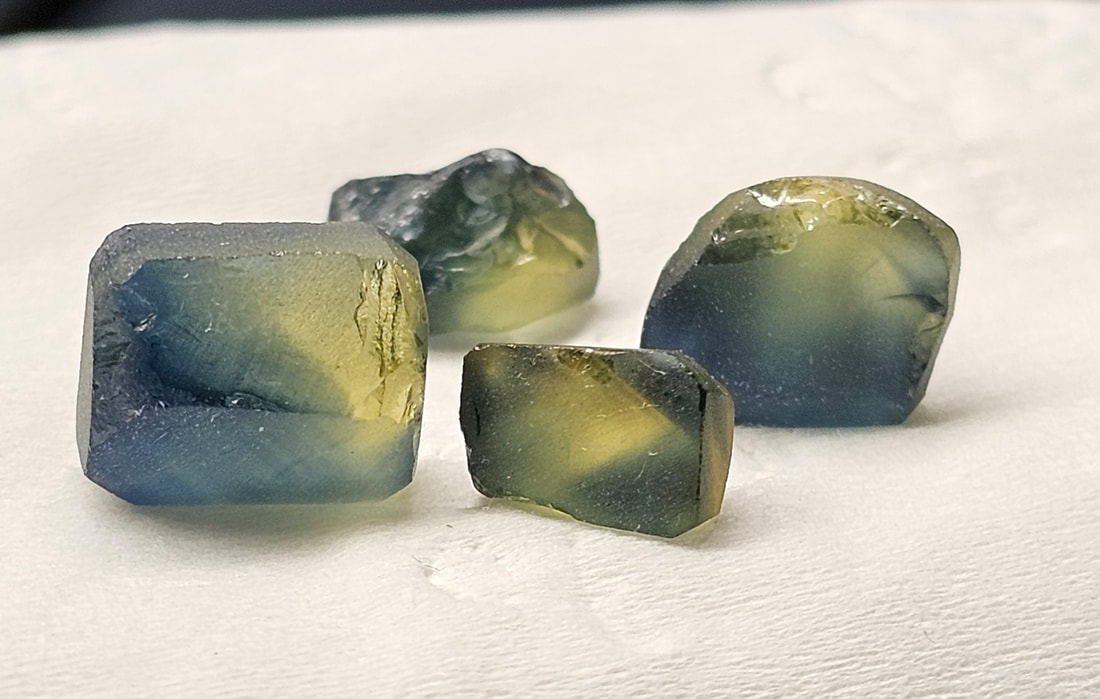
Sapphires come in a range of colours! Resembling the colours of nature. From Blue, Green Yellow to Parti colours. The term "parti sapphire" comes from the word "partition". Referring to the well-defined separation of colours within the gemstone. Fancy colours can be found on The Gemfields but are very rare.
The process
Not every sapphire can be faceted, majority of what we find is of low quality and cannot be used for faceting. The average percent that is facet grade is 3% meaning a large number of sapphires need to be found to be able to produce high-quality faceted sapphires to the market.
Faceting
Along with the mining we also facet majority of sapphires we find, precision faceting takes an exceptional amount of time, skill and patience. Colour and clarity assessment before proceeding to facet is the first step to take into consideration, a task also known as 'preforming'. Choosing a design that will maximise the brilliance and colour while considering the loss of carat weight is very important. Once a design is chosen, individual facets are cut meticulously into the stone at specific angles and then polished. Faceting is an art & science combined, resulting into a finished precision cut sapphire ready for Jewellery.
The Moh's Scale
The Mohs scale of mineral hardness is a qualitative ordinal scale, from 1 to 10. Characterizing scratch resistance of minerals thought the ability of harder material to scratch softer material. Sapphires on this scale are a 9, absolutely perfect for everyday wear.
Loupe clean
This term is widely used in the gem industry to describe a sapphire that appears flawless when examined under 10 x Magnification.
Eye clean
Also commonly used to describe a gemstone that appears to have - little to no visible natural inclusions when viewed with the naked eye. Essentially meaning that any inclusions are mostly not visible without magnification.
Natural inclusions
Sapphires like many other gemstones, often contain natural inclusions that form during their geological creation. These inclusions are considered "fingerprints" of the stone, providing an insight into its unique history. Here are some common types of natural characteristics. Rutile needles, feathers or bubbles. These can occur either internally or on the surface.
These inclusions often add character and uniqueness to the sapphire.
Heat treatment
The heat treatment process is widely accepted in the sapphire industry; however, we only use heat treatment when absolutely necessary. This method consists of using heat to slightly reduce the appearance of bronzing or rutile/silk. Importantly, heat treating does not change the natural elements of a sapphire.
Summary
Australian sapphires are rapidly earning global recognition for their quality, diversity and affordability, making them an increasingly popular choice for fine jewellery and engagement rings. Choosing a loose sapphire gives you the freedom to design a piece that is entirely your own, turning the experience into something personal, creative and memorable.
As rare natural gemstones, Australian sapphires also offer strong investment value. Their beauty and scarcity mean they hold and often increase, in worth over time. This makes them meaningful additions to any family collection and exceptional heirlooms for future generations.
Our Australian Sapphires are mined below the surface ranging from depths from 14ft - 45ft and also shallow open cut surface mining at an average depth of 4ft-12ft. This all takes place on The Central Highlands Gemfields, Queensland. The equipment we use to mine sapphires are very basic and ecologically friendly. Along with our own sapphires, we also source sapphires from other local trusted miners. Each sapphire is chosen for their high-quality and unique characteristics.
Colours
Sapphires come in a range of colours! Resembling the colours of nature. From Blue, Green Yellow to Parti colours. The term "parti sapphire" comes from the word "partition". Referring to the well-defined separation of colours within the gemstone. Fancy colours can be found on The Gemfields but are very rare.
The process
Not every sapphire can be faceted, majority of what we find is of low quality and cannot be used for faceting. The average percent that is facet grade is 3% meaning a large number of sapphires need to be found to be able to produce high-quality faceted sapphires to the market.
Faceting
Along with the mining we also facet majority of sapphires we find, precision faceting takes an exceptional amount of time, skill and patience. Colour and clarity assessment before proceeding to facet is the first step to take into consideration, a task also known as 'preforming'. Choosing a design that will maximise the brilliance and colour while considering the loss of carat weight is very important. Once a design is chosen, individual facets are cut meticulously into the stone at specific angles and then polished. Faceting is an art & science combined, resulting into a finished precision cut sapphire ready for Jewellery.
The Moh's Scale
The Mohs scale of mineral hardness is a qualitative ordinal scale, from 1 to 10. Characterizing scratch resistance of minerals thought the ability of harder material to scratch softer material. Sapphires on this scale are a 9, absolutely perfect for everyday wear.
Loupe clean
This term is widely used in the gem industry to describe a sapphire that appears flawless when examined under 10 x Magnification.
Eye clean
Also commonly used to describe a gemstone that appears to have - little to no visible natural inclusions when viewed with the naked eye. Essentially meaning that any inclusions are mostly not visible without magnification.
Natural inclusions
Sapphires like many other gemstones, often contain natural inclusions that form during their geological creation. These inclusions are considered "fingerprints" of the stone, providing an insight into its unique history. Here are some common types of natural characteristics. Rutile needles, feathers or bubbles. These can occur either internally or on the surface.
These inclusions often add character and uniqueness to the sapphire.
Heat treatment
The heat treatment process is widely accepted in the sapphire industry; however, we only use heat treatment when absolutely necessary. This method consists of using heat to slightly reduce the appearance of bronzing or rutile/silk. Importantly, heat treating does not change the natural elements of a sapphire.
Summary
Australian sapphires are rapidly earning global recognition for their quality, diversity and affordability, making them an increasingly popular choice for fine jewellery and engagement rings. Choosing a loose sapphire gives you the freedom to design a piece that is entirely your own, turning the experience into something personal, creative and memorable.
As rare natural gemstones, Australian sapphires also offer strong investment value. Their beauty and scarcity mean they hold and often increase, in worth over time. This makes them meaningful additions to any family collection and exceptional heirlooms for future generations.